

Tang Benzhong, Doctor of Science honoris causa
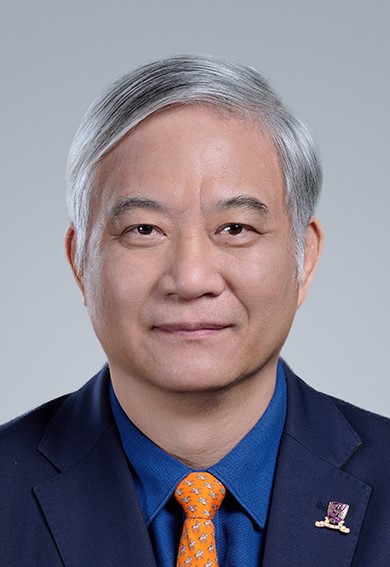
Prof. Tang Benzhong received his B.S. and PhD degrees from South China University of Technology and Kyoto University in 1982 and 1988, respectively. He conducted postdoctoral research at The University of Toronto from 1989 to 1994. He joined the Hong Kong University of Science & Technology in 1994 and was promoted to Chair Professor in 2008. He was elected to the Chinese Academy of Sciences in 2009 and the World Academy of Sciences for the Advancement of Science in Developing Countries in 2020. In 2021, he joined The Chinese University of Hong Kong, Shenzhen, as Dean of School of Science and Engineering, with a concurrent appointment of X.Q. Deng Presidential Chair Professor.
Prof. Tang has published >2,600 scientific papers, which have been cited >244,000 times. His h-index is 217. He has delivered >500 invited talks at international conferences and has been granted >100 patents. He is currently serving as Editor-in-Chief of Aggregate published by Wiley, and is sitting in the editorial boards of >20 scientific journals.
Prof. Tang is mainly engaged in the study of materials science, macromolecular chemistry and biomedical theranostics. He coined the concept of aggregation-induced emission (AIE), and his labs are spearheading the AIE research in the world.
Prof. Tang has been listed as a Highly Cited Researcher in both areas of Chemistry and Materials Science since 2014. He received a series of awards, scholarships and honors, e.g., Croucher Senior Research Fellowship Award in 2007 and the Chinese Chemical Society's Wang Baoren Award for Basic Research in Polymer Science. In 2014, he was awarded the 27th Khwarizmi International Science Award. In 2015, he was honored as the Honorary Citizen of Guangzhou. In 2017, Prof. Tang was awarded the National Natural Science Award (1st Class), along with the Scientific and Technological Progress Award (Ho Leung Ho Lee Foundation). In 2020, he received the MCF Best Review Award. In 2021, he was honored with the Nano Today International Science Award and several editorial commendations, including the Outstanding Reviewer award from Materials Chemistry Frontiers. In 2022, he received the NPY Webinar Certificate. In 2023, he received the Biomaterials Global Impact Award, the NJU-ACS Certificate, and the designation of World Leading AI Scientist by the International Artificial Intelligence Industry Alliance..and CCS–SINOPEC Award (the Chinese Chemical Society) in 2024, Guangdong Outstanding Contribution Award.