



Krzysztof Palczewski, Doctor of Medicine honoris causa
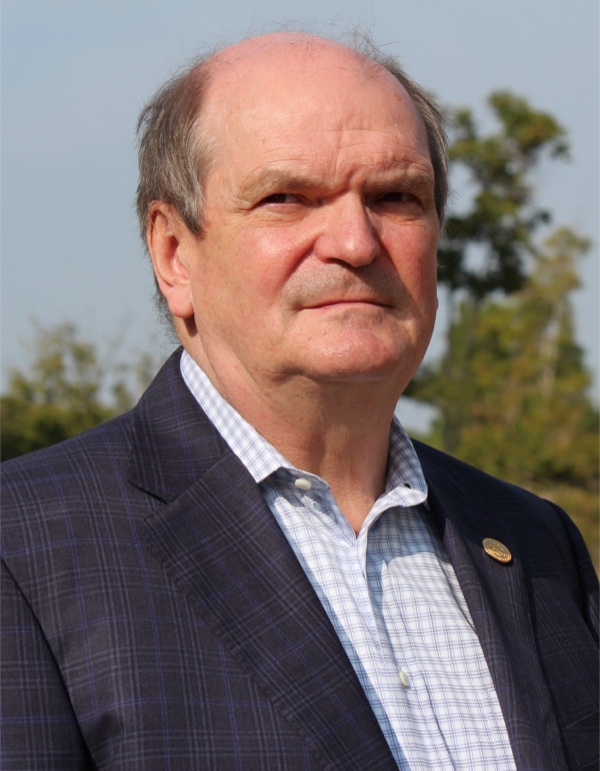
Prof. Krzysztof Palczewski, PhD, is an internationally renowned Polish-born American biochemist and pharmacologist who has made outstanding contributions to vision science and the treatment of eye diseases. He is best known for elucidating the structures and functions of key proteins in the retinal visual cycle, work that has laid a central foundation for understanding and treating a wide range of inherited retinal degenerative disorders.
Prof. Palczewski received his master’s degree from the University of Wrocław in 1980 and his PhD from the Wrocław University of Science and Technology in 1986. He began his scientific career in the United States in 1986 and subsequently held academic appointments at the University of Washington and Case Western Reserve University, where he was awarded the title of Distinguished University Professor in 2016. In 2018, he joined the University of California, Irvine, as the Irving H. Leopold Chair of Ophthalmology and founded the Center for Translational Vision Research.
His research spans multiple pioneering areas. He was the first to determine the high-resolution three-dimensional structure of rhodopsin, a discovery that profoundly influenced the field of G protein-coupled receptor (GPCR) research. He also elucidated the structure and function of RPE65, a key enzyme in the visual cycle, and discovered retinosomes, specialized retinyl ester storage organelles in the retina. Dr. Palczewski established multiple mouse models of blinding diseases, including age-related macular degeneration and Stargardt disease, and pioneered a systems pharmacology approach to accelerate drug discovery. More recently, he has focused on gene-editing strategies, such as adenine base editing (ABE), to precisely correct pathogenic mutations, successfully restoring vision in animal models and offering new hope for the treatment of inherited retinal diseases.
Prof. Palczewski’s scientific achievements have been widely recognized. He is a member of the U.S. National Academy of Sciences and the U.S. National Academy of Medicine, and a foreign member of the Polish Academy of Arts and Sciences. His honors include the Cogan Award (1996), the Friedenwald Award (2014), the Bressler Prize in Vision Science (2015), the Paul Kayser International Award for Retina Research (2018), and the Goodman and Gilman Award in Receptor Pharmacology (2022), among many others. He is widely regarded as one of the world’s leading vision scientists, whose work has fundamentally advanced both the understanding of visual mechanisms and the development of therapies for retinal diseases.