

Wisdom-led Innovation, Collaborative Future: The 2026 AI · Future Higher Education International Forum Held at MUST


Wisdom-led Innovation, Collaborative Future: The 2026 AI · Future Higher Education International Forum Held at MUST
Speaking at the 2026 World Artificial Intelligence Conference and High-Level Meeting on Global AI Governance in Shanghai, President Xi Jinping called on all countries to uphold a people-centered approach that strives upward and toward goodness so that artificial intelligence can empower every industry for the benefit of humanity. Against this backdrop, the 2026 AI · Future Higher Education International Forum was held on July 31 at Macau University of Science and Technology (MUST). Guided by the Smart Education Research Branch of China Association of Higher Education, organized by MUST and co-hosted by EEO Group (ClassIn) and the Nanyang AI Lab for Learning (Singapore), with support from Tencent Education and AgiBot, the forum has brought together experts and scholars from universities, research institutions, and education technology companies across Singapore, Vietnam, the Chinese mainland, Hong Kong, and Macao to explore cutting-edge topics including AI-driven teaching innovation and talent development, the construction of future learning spaces, educational data intelligence, and digital governance in universities, jointly charting the transformation pathways of higher education in the AI era.
Guests at the opening ceremony included Mr. Teng Sio Hong, Deputy Director of the Education and Youth Development Bureau of the Macao SAR Government; MUST Vice Presidents Dr. Tong Ka Lok, Dr. Kwong Ying Wa, and Chair Prof. Chen Yong; Associate Vice Presidents Prof. Leong Man Wai and Prof. Fang Quan; and the forum’s keynote speakers: Song Junbo, Founder of EEO Group (ClassIn); Prof. Sun Hua, Director of the Center for Excellent Teaching and Learning at Peking University; Prof. Hong Huaqing of the Centre for Research and Development in Learning at Nanyang Technological University, Singapore; Prof. Su Tao, Dean of Undergraduate School at Xidian University; Prof. Zhang Jian, Deputy Director of the Educational Technology Center at Shanghai Jiao Tong University; Dr. Liu Zhichun, Assistant Professor at the Faculty of Education, The University of Hong Kong; and Liu Yongjie, Senior Solutions Architect for the Education Industry at Tencent Cloud. They were joined by scholars from around the world and by MUST faculty and students.
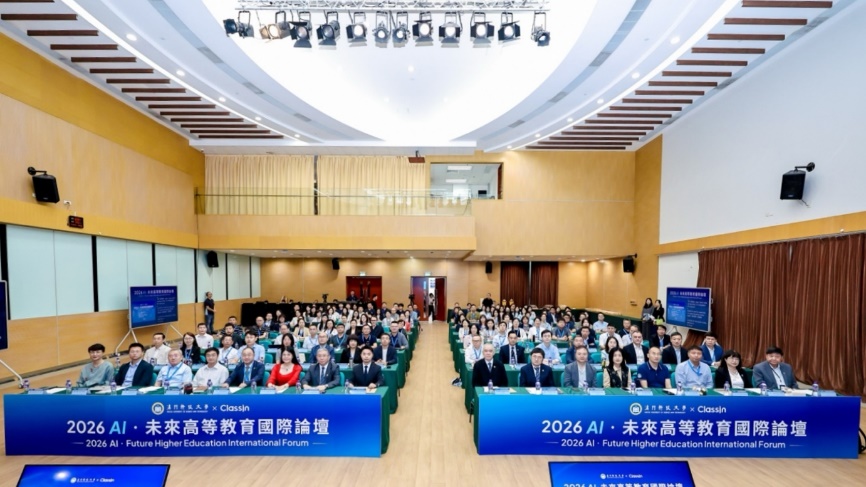
Group photo at the Opening Ceremony
In a video address, Song Yi, Vice Chairman of the Smart Education Research Branch of China Association of Higher Education, described Macao as a vital bridge between the Chinese mainland and the wider world, with distinctive strengths in educational exchange, technological innovation, and international cooperation. He called for boldly encouraging teachers to embrace AI and innovate with courage, strengthening theoretical research on “AI + education,” strengthening policy support for “AI + education,” and deepening industry-academia collaboration in the intelligent era.
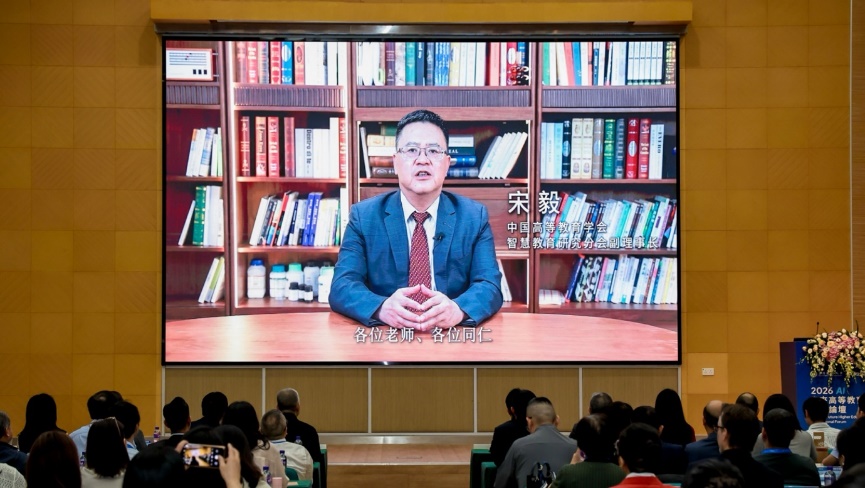
Video address by Vice Chairman Song Yi
In his address, Mr. Teng Sio Hong, Deputy Director of the Education and Youth Development Bureau of the Macao SAR Government, said the SAR Government, guided by its commitment to “revitalizing Macao through education and building Macao with talent,” is advancing the integrated development of education, science and technology, and talent by supporting local universities in launching interdisciplinary AI programs aligned with Macao’s priority industries, deepening “AI + education” applications, and accelerating efforts to build Macao into an international hub for high-caliber talent. The forum, he noted, is both a positive response to the national strategy and a practical step toward empowering higher education in Macao.
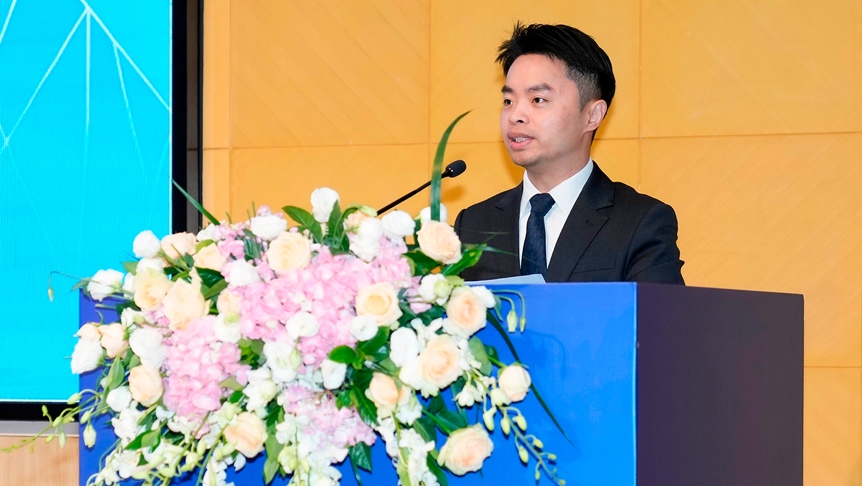
Address by Deputy Director Teng Sio Hong
Welcoming the guests on behalf of the University, MUST Vice President Chair Prof. Chen Yong noted that empowering educational innovation through technological innovation has become a defining pursuit of our era for universities worldwide. He expressed the hope that the forum would spark deeper exchange and collaboration among all participants, so that AI can genuinely empower individual growth.
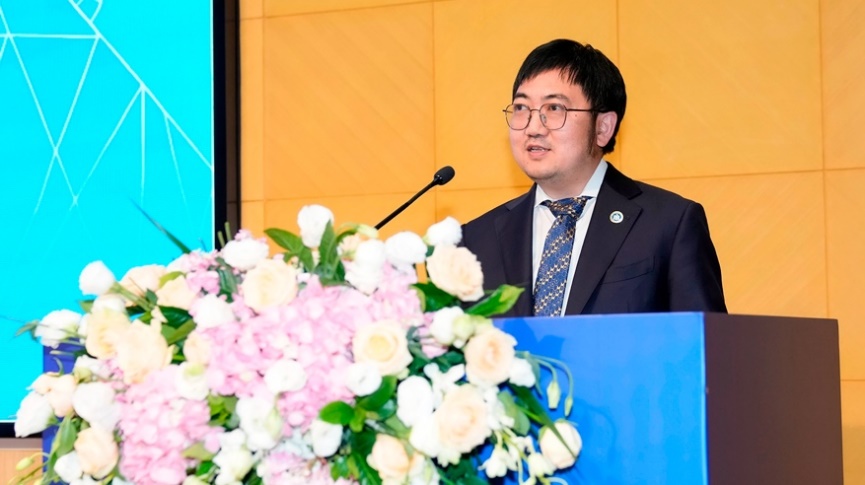
Address by Vice-President Chen Yong
MUST Vice President Dr. Tong Ka Lok then delivered the forum’s keynote address, “Change and Constancy: A Systemic Reinvention of the University in the AI Era — Practice and Reflections from MUST” Drawing on eight years of digital and intelligent transformation at MUST, he described how the university has progressed from building a unified data foundation to developing WeMust, an autonomous and controllable intelligent hub, facilitating efficient data flows to streamline work and study for students and faculty, thereby empowering personalized education in the AI era. He emphasized that digital-intelligent transformation is a marathon without a finish line: what changes are the forms, paradigms, and methods, while what remains unchanged is the people-centered, student-and-faculty-focused original aspiration of education. Only by holding fast to this principle, he argued, can the university achieve steady and lasting progress.
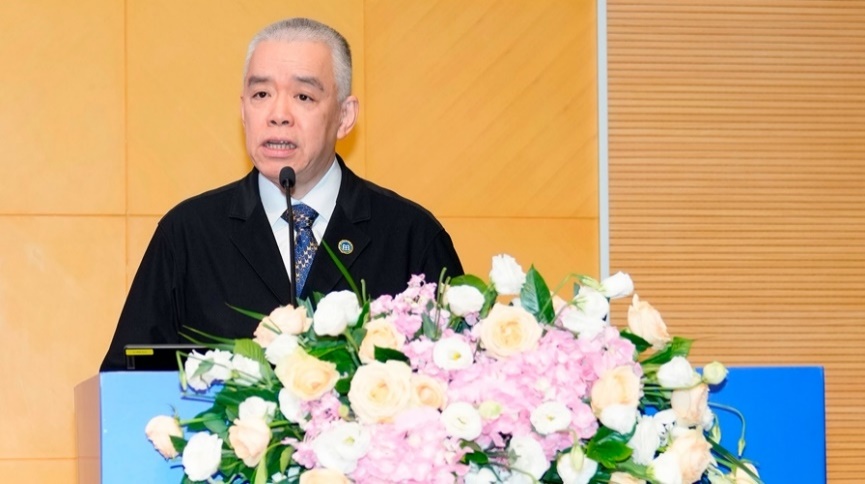
Keynote speech by Vice-President Tong Ka Lok
Eight keynote addresses were also delivered, offering cutting-edge insights on AI literacy, the future of digital and intelligent education, smart teaching environments and curriculum development, and intelligent learning companions. During the forum, participants also toured MUST’s smart campus facilities, and a closed-door salon on August 1 concluded the forum with in-depth discussions on implementation pathways for AI-empowered higher education.
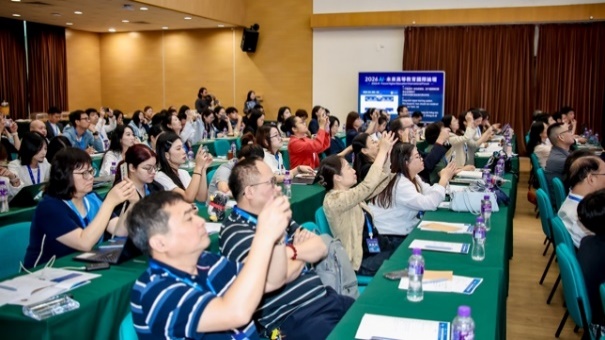
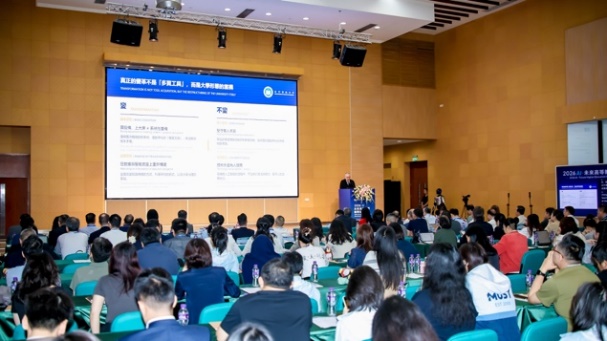
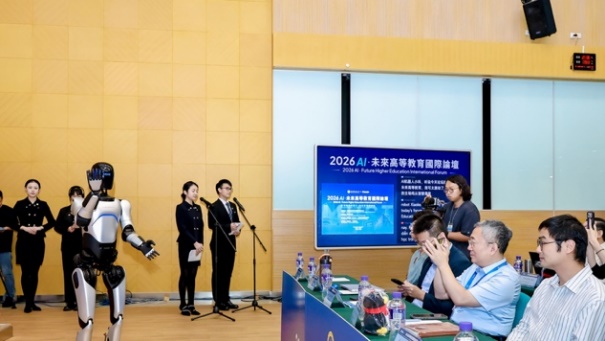
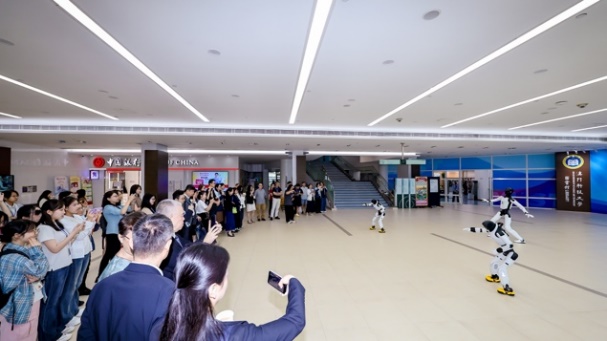
Event Highlights
Amid the wave of artificial intelligence, knowledge production, teaching paradigms, and university governance are undergoing profound transformations. The forum echoes the deployment of China’s national “AI+” initiative and offers a high-level platform for dialogue among universities, research institutions, and education technology companies worldwide, helping to build consensus on empowering educational innovation through technological innovation so that AI can genuinely become a positive force in advancing human wellbeing and driving the progress of human civilization, thereby injecting fresh momentum into the innovation and sustainable development of higher education.