

MUST Interdisciplinary Undergraduate Team Wins Silver Award at the 2026 SynBio Challenges Competition


MUST Interdisciplinary Undergraduate Team Wins Silver Award at the 2026 SynBio Challenges Competition
From August 21 to 23, the finals of the Synbio Challenges were successfully held at Shenzhen University of Advanced Technology. An interdisciplinary team of undergraduates from the Faculty of Medicine, Faculty of Innovation Engineering, and School of Business at Macau University of Science and Technology (MUST) stood out in the highly competitive "Biomedicine Track." The team won the National Silver Award with their cutting-edge project integrating AI and synthetic biology, titled “AstroShield: An Integrated Detection and Treatment Approach to Biofilm Control and Addressing Bacterial Resistance in Space Stations”. This achievement fully demonstrates the MUST students' scientific research capabilities, interdisciplinary collaboration spirit, and academic innovation.
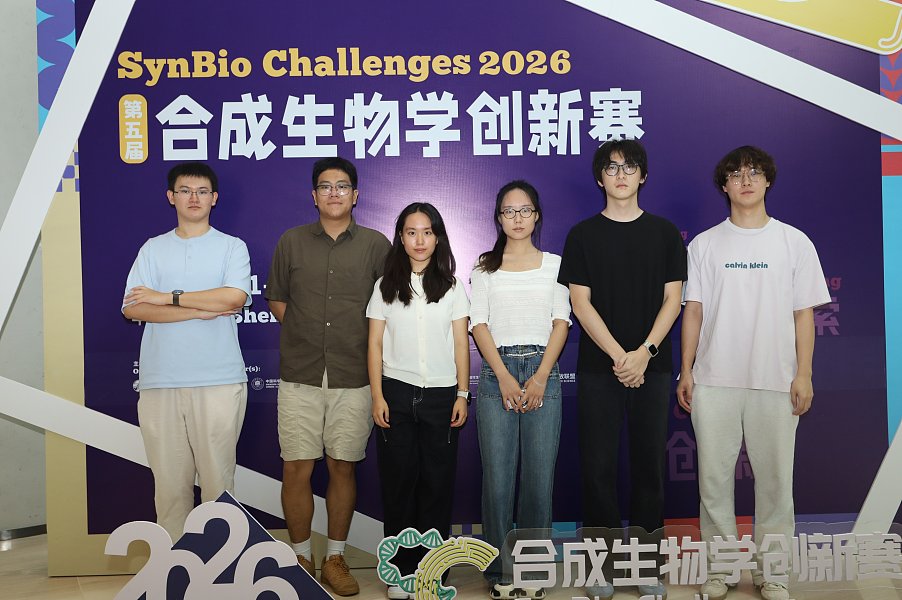
Group photo of the MUST-Space team at the event
The award-winning team consists of undergraduates from three faculties and completed this research under the joint guidance of Assistant Dean and Associate Professor Daniel Baptista-Hon from the Faculty of Medicine, along with Assistant Professors Ting Huang and Zhongjun Li from the Faculty of Innovation Engineering.
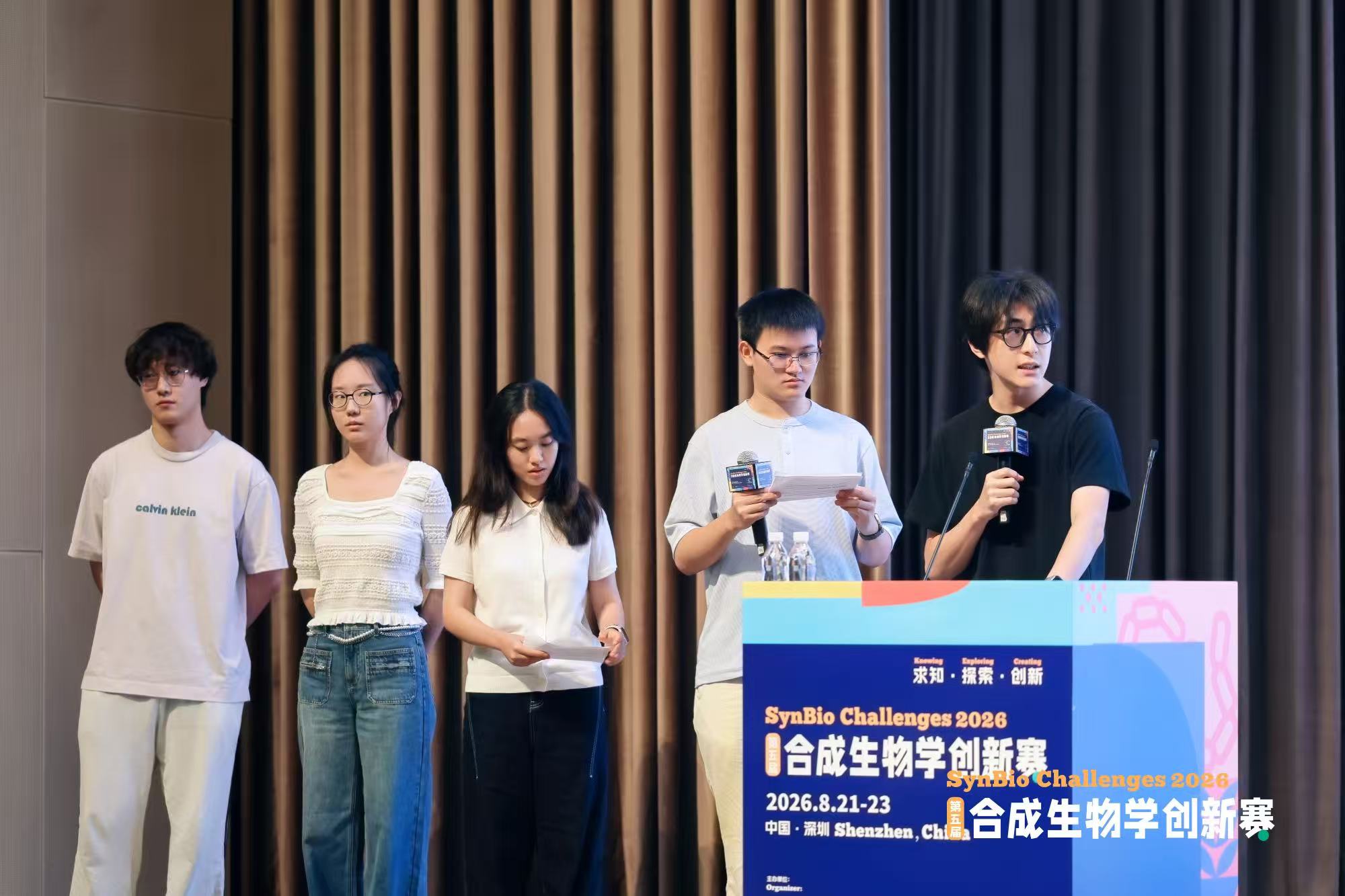
MUST-Space at the defense session
Hosted by the Chinese Society of Biotechnology, the competition upholds the core philosophy of "Learning by Creating, Creating for Use." It attracted 3,849 young talents from 512 teams across 9 countries, including China, Brazil, Russia, Japan, and Singapore. This year, the competition launched an overseas live broadcast for the first time, accumulating nearly 30 million topic engagements across all platforms at home and abroad. This further amplified the event's brand voice and highlighted its platform value and international influence in gathering global youth innovation.
The award-winning research focuses on the critical issue of drug-resistant bacterial biofilms in astronaut life support systems under extreme microgravity environments in space. The project innovatively proposes a highly automated "Integrated Detect-Treat" workflow. The upstream module utilizes AI image recognition to precisely detect and localize biofilms, while the downstream module features engineered Pichia pastoris equipped with a "spatiotemporal co-delivery" genetic timer. The engineered bacteria autonomously secrete the signaling molecule CDA to mediate persister cell activation, followed by DspB enzymatic degradation of the biofilm polysaccharide matrix. Finally, within a precise time window, the system triggers a burst release of the antimicrobial peptide (AMP) LL-37 to eradicate bacteria via physical pore formation. This project innovatively overcomes the limitations of traditional physical or antibiotic sterilization, laying a strong foundation for future research.
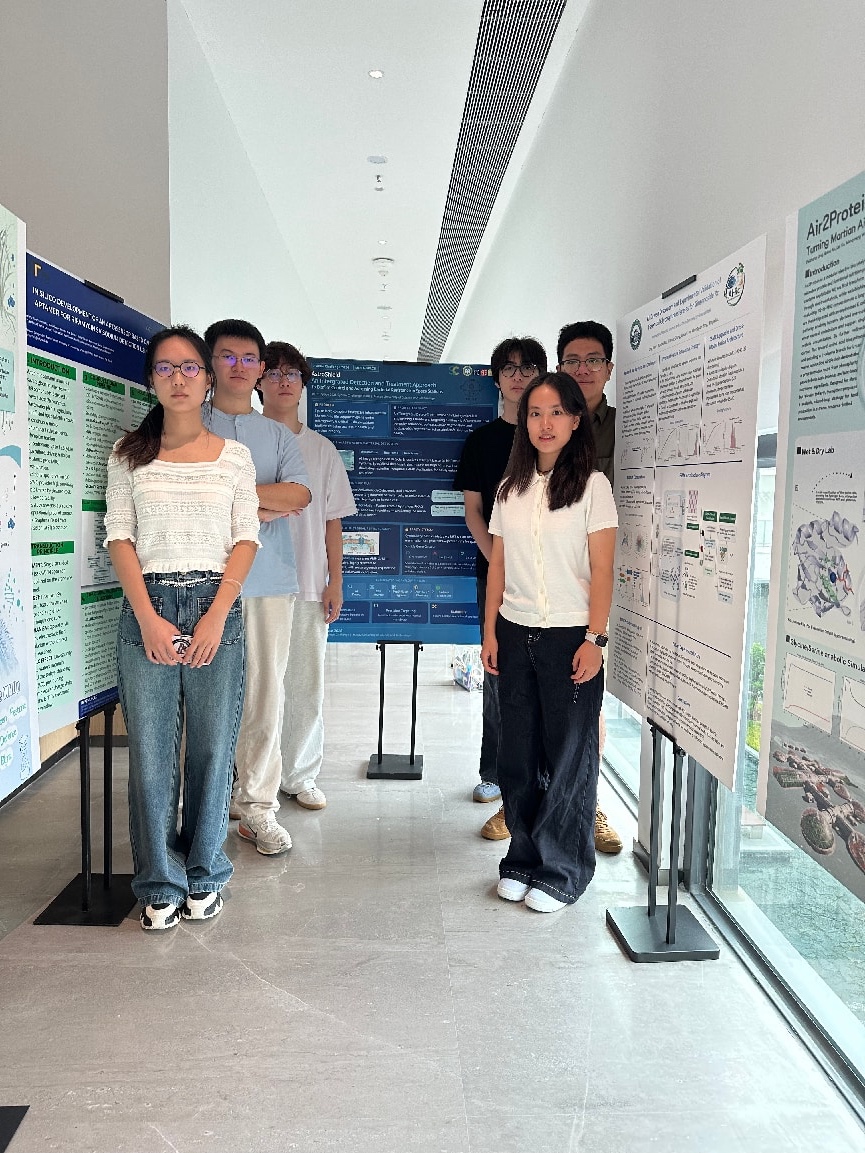
MUST-Space team and their AstroShield Poster
Assistant Dean Daniel Baptista-Hon, one of the project supervisors from the Faculty of Medicine, said, "This achievement demonstrates what students can accomplish when they work across disciplinary boundaries. The team combined biomedical science, engineering, and commercial thinking to develop a creative approach to a complex problem. Winning the Silver Prize is a strong endorsement of the quality of their hypothesis, scientific rationale, and proposed plan."
He added, "The achievement highlights MUST's commitment to interdisciplinary education, student-led research, and innovation. It also demonstrates the value of bringing together students with complementary expertise to address emerging challenges at the intersection of health, biotechnology, engineering, and space exploration. The team's next step will be to refine the experimental methods and begin generating preliminary data to evaluate the feasibility of the proposed approach. "
Faculty of Medicine student representatives Zhuoru Li and Tianyi Wang stated that their greatest takeaway was the collision of interdisciplinary thinking and the transformation from "passive learning" to "active research." The team once faced bottlenecks regarding the precise regulation and kinetic timing of the synthetic biology genetic circuits. However, through repeated deduction and careful guidance from their advisors, they ultimately achieved a breakthrough, profoundly realizing that scientific research is a continuous exploration of the unknown.
Shuyuan Dong, the Faculty of Innovation Engineering representative in charge of hardware and AI design, noted that applying automated engineering technology to space healthcare scenarios was a major challenge. This experience allowed him to deeply appreciate the tremendous potential of integrating life sciences with engineering control.
The SynBio Challenges is dedicated to guiding young students to examine life science innovation. Winning the Silver Award not only reflects MUST's fruitful achievements in cultivating high-level, hybrid talents in medicine, engineering, and business, but also showcases the innovative responsibility and international perspective of young students in the field of responsible life science and technology.
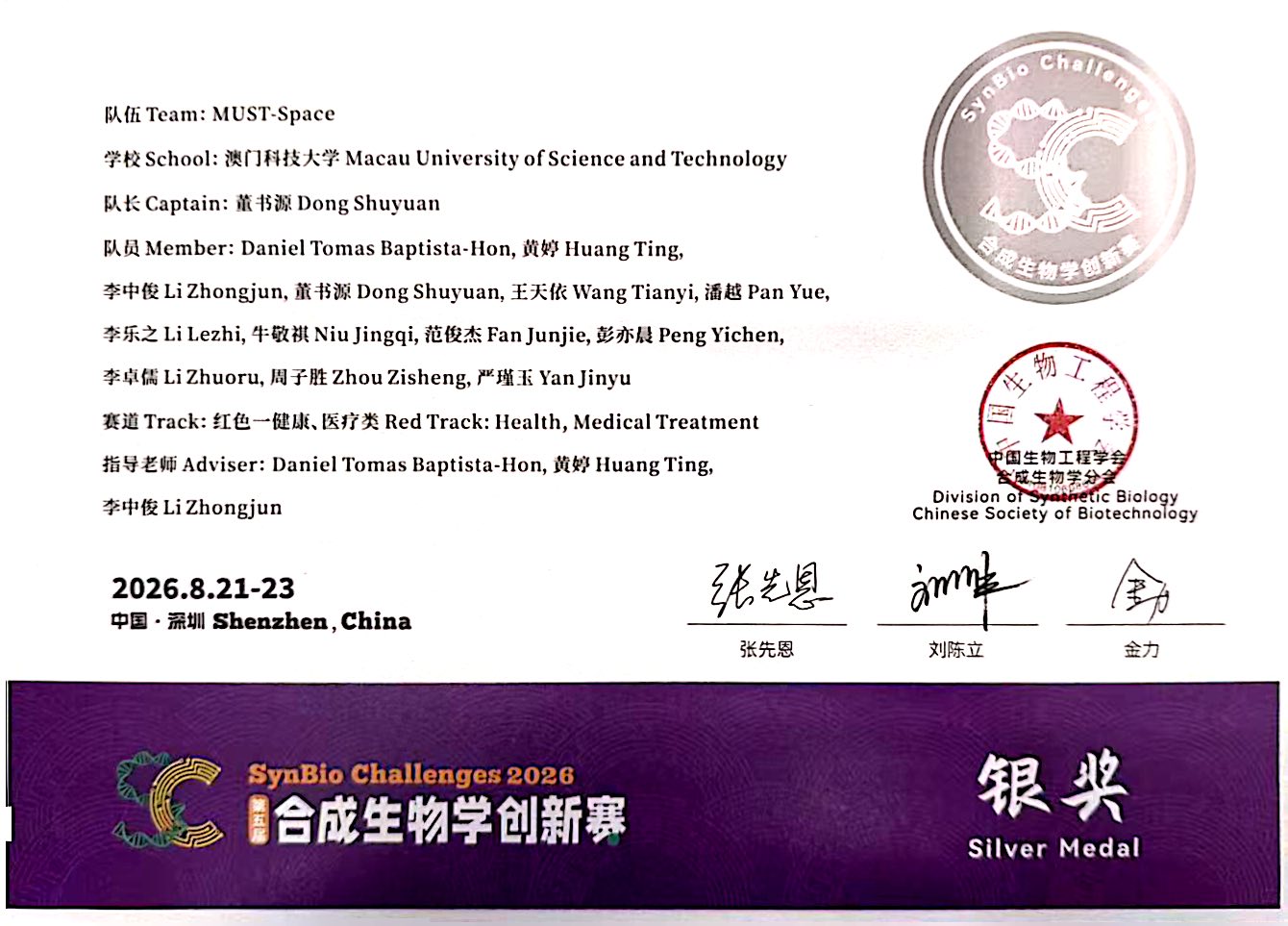
Sliver Award Certificate
List of Team Members:
Faculty of Medicine (Bachelor of Medicine and Bachelor of Surgery - MBBS): Zhuoru Li, Tianyi Wang, Yue Pan
Faculty of Medicine (Pharmacy): Lezhi Li, Jinyu Yan
Faculty of Innovation Engineering (Automation and Systems Engineering): Shuyuan Dong, Zisheng Zhou, Junjie Fan
School of Business (Business Administration): Jingqi Niu, Yichen Peng